
KJV Study Bible with concordan
Holy bibleLibraries & Demo
4.719.00 Reviews
- Version
- Biblical commentaries for your Bible study 18.0
- Installs
- 50.00K
- Age Rating
- Everyone
Screenshots

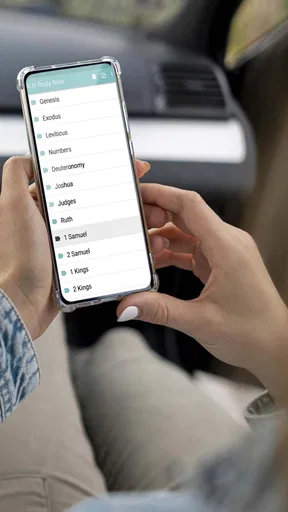


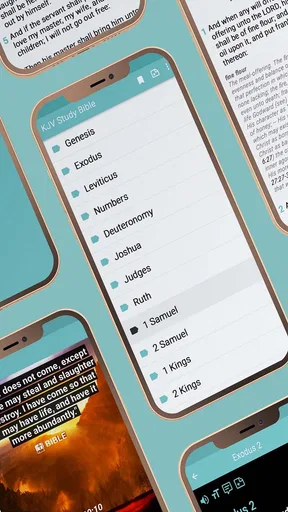

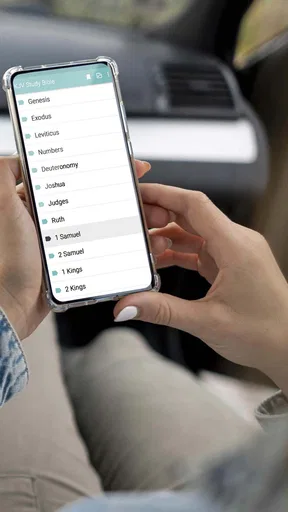

Our Review of KJV Study Bible with concordan
 Analysis by Appyee
When I want to study a passage without carrying a printed reference shelf around, KJV Study Bible with concordan is the kind of app I open first. It is a free Bible-study app in the Libraries & Demo category, developed by Holy bible, and its focus is clear: helping me read the King James Version alongside biblical commentaries. That narrow purpose is also its main strength. It does not try to be a complete church-management tool, a social reading platform, or a modern translation hub. It is built for the moment when I have a verse in front of me and want more context before moving on.
The app has reached over 50 thousand installs and holds a 4.7 average from around 2 thousand ratings, which suggests that its straightforward approach works for many readers. I can use it without paying, although in-app purchases are listed at $0.99 per item. It is rated for Everyone, and the current release is identified as Biblical commentaries for your Bible study 18.0. The app runs on Android 6.0 and later, so it remains accessible on older devices rather than demanding a recent phone.
From a quick verse lookup to a more considered study
I find the most useful way to approach this app is to start with a small, concrete question rather than browse without a goal. That makes a quick lookup easier to turn into a thoughtful reading session, while keeping the KJV passage—not the commentary—at the center. From there, I can decide whether the explanation is enough for now or whether the passage merits a slower, more considered study.
The starting condition: knowing the passage is not always enough
My usual starting point is simple. I remember a verse, hear a reference during a sermon, or reach a difficult paragraph in the KJV and realize that reading the words alone is not giving me enough background. The KJV has a distinctive style, and its vocabulary can slow down a reader who is more comfortable with contemporary English. In that situation, a commentary is useful because it gives me another layer to consider instead of leaving me to guess at the meaning.
This app fits that need better than a basic Bible reader that only displays chapter text. Its store summary describes biblical commentaries for Bible study, and that is exactly the role I found most valuable. I can approach it with a question such as, “What is happening around this verse?” or “How have readers traditionally understood this passage?” That makes the app more useful for deliberate reading than for simply ticking off a daily chapter.
There is an important distinction here. A commentary is not the same thing as the biblical text, a dictionary, or a collection of several modern translations. I treat its notes as study assistance rather than as a replacement for reading the passage carefully. If I want to compare wording across translations, examine original-language tools, or follow a highly structured reading plan, I would look elsewhere. This app is more focused, and that focus makes the first step less confusing.
Step one: begin with the KJV text and identify the question
I get the best results when I do not open the commentary randomly. I first read the surrounding verses in the KJV, not just the line that caught my attention. That small habit matters because a note can clarify a phrase while still leaving the larger argument misunderstood. Reading the passage first gives me a clear starting point and helps me notice whether my question concerns vocabulary, history, symbolism, or the relationship between two verses.
The KJV setting is especially useful for readers who already prefer that translation. Its older wording can feel formal and memorable, but it can also hide the sentence structure. I sometimes read a paragraph once for its overall movement, then return to the exact verse that needs explanation. The app works best in that second pass: the text provides the anchor, and the commentary becomes a prompt for closer attention.
For a beginner, I would recommend choosing a short passage rather than opening a long book and trying to absorb everything at once. A few verses allow the reader to test whether the commentary style is helpful. It also prevents a common mistake: treating every note as equally important. The most productive study session usually starts with one question and ends when that question has been clarified enough to continue reading.
Step two: move from reading into commentary
After I have read the passage, I move into the explanatory material connected with it. This is where the app becomes more than a digital copy of a Bible. The commentary gives me a second perspective and can draw attention to details I might pass over during a fast reading. I find this particularly helpful with passages that use unfamiliar expressions or depend heavily on the surrounding chapter.
My practical workflow is to read the note once without trying to memorize it, then return to the verse and ask whether the explanation changes my understanding of the sentence. If it does, I reread the nearby verses. If it does not, I move on rather than forcing a conclusion. That approach keeps the commentary in its proper place: useful guidance, but not a substitute for personal judgment and context.
One non-obvious advantage of this workflow is that it reduces the temptation to collect disconnected facts. Many Bible-study tools encourage users to jump between dictionaries, maps, cross-references, and articles. Those resources can be valuable, but they can also turn a short reading into a maze. Here, the direct movement from KJV passage to commentary keeps the session compact. For a reader with only a few minutes before work or bedtime, that simplicity is a real benefit.
Step three: use the concordance mindset without losing the passage
The name points toward concordance-style study, and I find that approach most useful when I am tracking a repeated word or idea. Instead of asking only what one verse says, I can think about where the same term appears elsewhere and whether its meaning shifts with context. That is a better use of a concordance than treating it as a shortcut to a single predetermined answer.
For example, if a familiar word appears in a difficult verse, I would note the immediate meaning first, then use the broader word trail to compare related passages. The important trade-off is that repeated vocabulary does not automatically mean identical meaning. A word can carry different shades depending on the speaker, audience, and argument. The app can support the search habit, but I still need to read each surrounding passage rather than copying an interpretation from one location to another.
This is one of the app’s more useful study habits for someone moving beyond casual reading. It encourages me to connect passages, but it also reminds me that connections need context. A reader who only wants a verse of the day may never use this strength. Someone preparing a small-group discussion, personal lesson, or sermon outline is more likely to appreciate it.
Step four: create a handoff from private reading to discussion
The next stage is the handoff from my own reading to a conversation with someone else. I might be preparing for a Bible study meeting, checking a point before discussing it with a friend, or trying to explain why a particular verse is difficult. The app gives me a compact way to revisit the passage and its commentary before that conversation, without needing to assemble several separate reference books.
I do not treat the commentary as the final word when another person asks me about a passage. Instead, I use it to form a clearer question: “Does this explanation fit the chapter?” or “Are there other reasonable ways to read this phrase?” That makes the handoff healthier. I bring the text and a possible interpretation into the discussion, rather than presenting a note as unquestionable authority.
A realistic example would be a Sunday evening reading session. I may have heard a verse during the morning service but not understood one expression in the KJV. Later, I open the app, read the surrounding section, check the commentary, and write down the point that still feels uncertain. The result is not instant expertise; it is a better question to bring to a group or trusted teacher. That is a modest outcome, but it is exactly where this type of app earns its place.
What the workflow produces when it goes well
At the end of a good session, I usually have three things: a clearer understanding of the passage’s immediate setting, a note about an important word or theme, and one question that deserves further discussion. The app is strongest at producing that kind of focused progress. It helps me move from “I have read this verse” to “I have considered what it is doing in the chapter.”
The result is also easy to repeat. I can use the same sequence with a short passage, a chapter section, or a theme that appears in several places. Because the app is free to start using, it is practical for readers who want to experiment before committing to a larger study system. The Everyone content rating also makes it suitable for family reading, though younger readers may still need help with the KJV’s older language and with evaluating commentary thoughtfully.
I would recommend it most strongly to three kinds of users. First are KJV readers who want explanatory material beside their preferred translation. Second are students who need a lightweight starting point before consulting larger reference works. Third are experienced readers who want a quick way to revisit a passage before a group discussion. In each case, the app’s value comes from reducing the distance between the verse and the first useful explanation.
Where the flow breaks: limitations I noticed
The same narrow focus that makes the app approachable can become limiting. If I want several translations on one screen, extensive original-language analysis, audio reading, maps, reading plans, or a polished note-taking system, this is not the first app I would choose. A broad Bible platform will usually handle those tasks better because it is designed as a larger ecosystem rather than a commentary-centered reader.
The KJV itself can also be a barrier. Readers who are new to its vocabulary may understand the commentary but still struggle with the verse it explains. I would not recommend this as the only Bible app for someone who specifically wants contemporary wording. A useful alternative workflow would be to read the KJV here and consult a modern translation in a separate trusted resource, then return to the commentary for the historical or interpretive angle. That extra handoff takes time, but it prevents the older language from becoming the main obstacle.
Another point of friction is interpretive dependence. A commentary can make a passage feel settled before I have examined it carefully. I have to resist reading the note first and letting it dictate what I see in the text. The better order is passage, context, commentary, and then passage again. Users who prefer completely neutral tools may find any commentary-based app too opinionated, while users seeking a single definitive answer may be disappointed that study still requires judgment.
The purchase model deserves a quick practical mention as well. The app is free, but individual in-app items are listed at $0.99 each. That does not make the starting cost high, yet it means I would pay attention to what is included before building a long-term workflow around optional material. For a short trial, the free entry is convenient; for extensive study, I would first decide whether the available content matches my needs well enough to justify additional purchases.
How it compares with familiar alternatives
Compared with a plain KJV reader, this app offers more direction because the commentary is part of the study experience. A plain reader may be faster when I only need to look up a verse, but it leaves the interpretation work entirely to me. Compared with a large all-in-one Bible platform, this app feels less crowded and easier to approach for one passage, although the larger platform will usually provide more translation choices and connected tools.
Compared with printed commentaries, the app is more convenient for quick sessions and for carrying a reference in a phone. Printed books can be easier to browse broadly, annotate physically, and compare across volumes, so serious students may still prefer them for extended research. I see this app as a companion rather than a complete replacement for a well-chosen physical library.
Compared with a general web search, the app offers a more focused path. Searching the web can produce many viewpoints, but it also introduces distractions and uneven source quality. Here, I begin inside a Bible-study context. The trade-off is breadth: web searches may expose more perspectives, while the app gives me a shorter route to commentary connected with the KJV.
Who should install it, and who should skip it
I would install it if my main question is, “How can I understand this KJV passage more carefully without opening several reference sources?” It is also a sensible choice for someone who wants a free starting point, prefers a simple study routine, or needs a portable commentary for occasional preparation. The current Android requirement of 6.0 or later makes it a reasonable option for people using an older phone.
I would skip it if my priority is a modern translation, scholarly comparison across many traditions, advanced language tools, or a fully organized study notebook. I would also look elsewhere if I want a highly visual experience or a guided daily program that tells me exactly what to read next. Those needs call for a broader Bible platform, a dedicated academic resource, or a reading-plan app.
My advice is to test it with a passage you already know. Read the chapter section, consult the commentary, and then ask whether the explanation helped you notice context rather than merely giving you a conclusion. If it improves that process, it can become a useful everyday reference. If it leaves you wanting translation comparison or deeper research tools, you will know quickly that it should remain a supplementary app.
My final assessment after following the full workflow
KJV Study Bible with concordan succeeds because it keeps one journey in view: start with the KJV, examine the passage, consult biblical commentary, and carry a clearer question into further study or conversation. I appreciate that it does not need to be everything. Its strongest moments come when I have a specific verse, limited time, and a genuine desire to understand more than the surface wording.
It is not a universal Bible replacement, and its usefulness depends heavily on already wanting the KJV and being willing to read commentary critically. The older language, the focused toolset, and the possibility of paid individual items may create friction for some readers. Still, for a free commentary-centered study app with a 4.7 average and a growing audience, it offers a practical bridge between casual reading and more intentional Bible study. I would recommend it to KJV readers who want a simple next step, while advising everyone else to compare its focused workflow with the broader tools they actually need.
Verdict
Strengths of KJV Study Bible with concordan
- Includes the complete King James Version Bible text.
- Built-in concordance helps locate related words and verses.
- Useful for topical study and cross-referencing passages.
- Works well for readers who prefer traditional biblical language.
- Portable reference for personal devotion, church, or Bible study.
Limitations of KJV Study Bible with concordan
- KJV wording can be difficult for readers unfamiliar with older English.
- Some study features may require patience to navigate on smaller screens.
- Ads or in-app purchases may interrupt the reading experience.
- Concordance results may feel limited compared with dedicated Bible tools.
- No modern translation is included for easier verse comparison.
Similar Picks in This Category
View All
PGT: GFX, Launcher & Optimizer
Trilokia Inc.4.5

AusweisApp Bund
Governikus Service GmbH3.7

Cardboard
Google LLC3.2

Gamers GLTool with Game Tuner
Trilokia Inc.4.5

Multi Web Chat - Read Secretly
World Scan & Cleaner3.8

App Cloner Premium & Add-ons
App Listo1.9
Frequently Asked Questions
What is KJV Study Bible with Concordance?
KJV Study Bible with Concordance is a Bible study app centered on the King James Version. It combines the full biblical text with study tools such as a concordance, search functions, bookmarks, notes, and reading features. It is designed for readers who want to study Scripture, compare recurring words and themes, and keep useful passages organized on an Android or iOS device.
Does the app include the complete King James Version Bible?
Yes, the app is intended to provide access to the complete King James Version, including both the Old and New Testaments. From the main reading area, users can normally select a book and chapter, move between passages, and search for specific words or verses. Before downloading, check the store description and your device’s version requirements to confirm the exact edition and included features.
How does the concordance help with Bible study?
The concordance allows you to look up words and find the passages where they appear throughout the King James Bible. This can be useful when researching a topic, following a repeated biblical term, or locating a verse you remember only partially. Search results make navigation faster than browsing chapter by chapter, although results may depend on the app’s spelling and search settings.
Can I use KJV Study Bible with Concordance offline?
In many cases, Bible reading and previously downloaded content can be used without an internet connection, which is convenient for travel, church services, or areas with limited coverage. However, features such as advertisements, synchronization, updates, external links, or additional resources may require internet access. It is best to open the app once while online and test offline reading before relying on it.
Is KJV Study Bible with Concordance free to download?
The application may be available as a free download, but the exact pricing model can vary between Android and iOS. Some versions may include advertising, optional purchases, or premium tools. Review the relevant app-store listing before installing, paying particular attention to in-app purchases, privacy information, permissions, and whether features such as notes, audio, or advanced study resources are restricted.
